The bestiary of Warhammer Fantasy Roleplay.
In the Old World, whatever prowls the woods is not waiting politely for adventurers to come and collect experience. Beastmen hold the forests, skaven dig under the cities, the dead refuse to stay down, and a single troll is enough to wipe out a party of beginners.
Here is how the fourth edition bestiary works: reading a creature profile, the main monster families, the creatures the game is known for, the trait system, building an encounter, and the habits that make a monster memorable at the table.
Reading a creature profile.
A creature reads exactly like a player character: the same eleven-characteristic profile, M, WS, BS, S, T, I, Ag, Dex, Int, WP and Fel, a Wounds total, then a list of traits standing in for skills and talents. Nothing else is needed to run it.
That is the big difference with other games: monsters and characters share the same engine. A goblin tests its Weapon Skill the way you do, takes the same damage and suffers the same critical wounds. The game master keeps a single set of rules in mind, and a plain bandit stays dangerous right to the end of the campaign.
The main creature families.
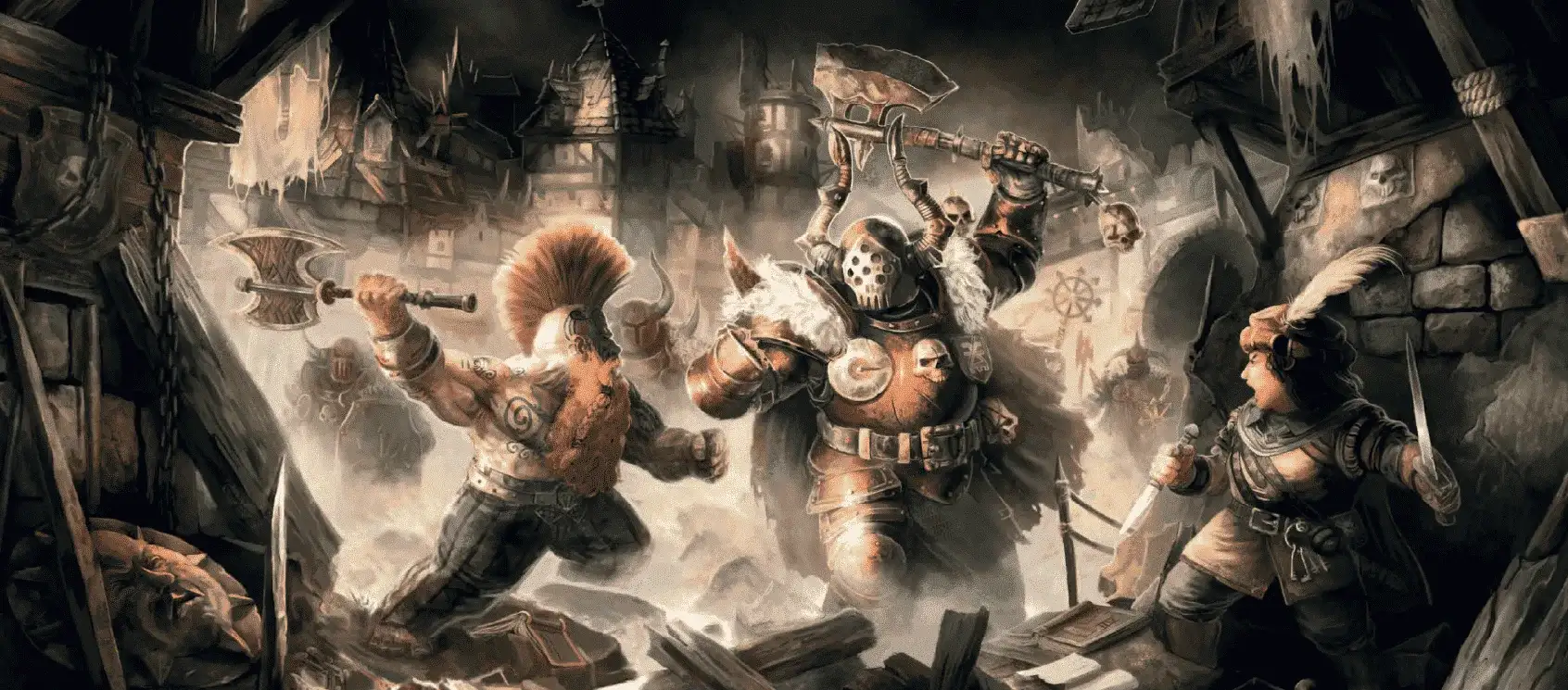
They fight because it is fun, not out of strategy. In numbers they more than make up for the lack of a plan.
Neither animals nor men, they do not negotiate and take no prisoners. Their presence means the forest has been corrupt for a long time.
They betray each other more often than they attack the Empire. The warpstone they mine contaminates everything it touches.
They never flee and need neither food nor sleep. Against them, fire is often the only tactic worth the name.
Cultists and mutants first, daemons later and rarely. A whole campaign can hold together without a single daemon showing up.
Wolves, bears and trolls are a reminder that nature kills before Chaos does. One badly prepared journey is enough to meet a hungry griffon.
Six creatures the game is known for.
Alone it runs the moment it loses the upper hand. Twenty of them are the worst opponent a first tier party can meet.
Stronger and tougher than a human, it attacks without warning. A single gor can put a whole party in trouble.
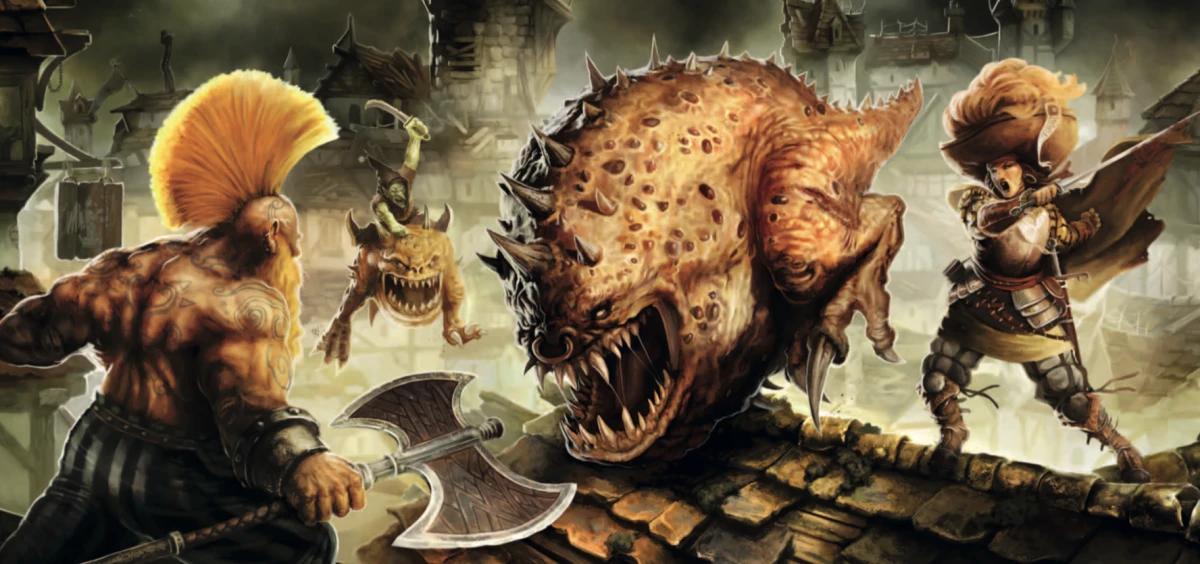
It regenerates every round, which makes the fight endless without fire. Its vomit ignores armour and dissolves what it touches.
One goblin is worth nothing, which is precisely the trap. They come in twenties, with fanatics and spiders.
Once human, hunger changed it, and now it prowls the graves. It causes Fear, which matters more than its claws.
It does not attack: it owns land, servants and time. The final fight only comes after three sessions of investigation.
Traits, and no challenge rating.
Creatures spend no experience: they carry traits that say everything about how they fight. Armour 2, Weapon +7, Fear 2, Night Vision, Regenerate, Flight, Venom, Size Large. Each trait fits into one line of rules, and combining them is enough to build any monster you like.
Nothing, on the other hand, tells the game master whether a fight is balanced, since Warhammer offers no challenge rating at all. Size alone can decide an encounter, as every step of difference doubles the damage dealt. A troll against four starting characters is not a challenge, it is a massacre, and running away remains a perfectly valid answer.
Building an encounter.
A Warhammer encounter almost always starts from a situation rather than from a monster: a cart abandoned on the road, a village that has stopped sending its grain, sewers the ratcatchers have been avoiding for a month. The creature only shows up afterwards, as the explanation.
Above all, plan for what the party can do besides drawing steel. Bargaining with goblins, paying for passage, burning out a nest, warning the watch: the game rewards careful players and very quickly punishes those who treat every encounter as a compulsory fight.
Bringing a monster to life at the table.
A creature's traits hold all the surprises: Fear, Armour, Regenerate. Discovering them mid session costs ten minutes and a lot of tension.
A failed Fear test stops you approaching, a Terror test sends you running. Well placed, it does more for a scene than ten points of damage.
Mud, fog and tunnels are worth several points of characteristic. A troll in a swamp is not the same monster as a troll on a road.
Tracks, a smell, a slaughtered herd: the monster exists before it appears. The table builds its own fear.
Goblins and skaven bolt as soon as a fight turns, and rightly so. An enemy who runs comes back later, better prepared.
A severed hand or a lost eye tell the story better than a points tally. Critical wounds are a fight's memory.
Running your monsters online.
A game master hunting for a profile in the middle of the book while the party waits ruins the whole effect: the vermin burst out of the sewers, and it takes two minutes to find their Wounds line.
Tomeus gathers the sheets, the dice, the backdrop and the music in a single window. Your players see the scene, you keep your notes on your own side, and nobody installs anything.
Go further with Warhammer Fantasy Roleplay.
How to Start Playing Warhammer Fantasy Roleplay
The Old World, the d100, randomly rolled careers and lethal combat: the complete guide to start playing Warhammer Fantasy Roleplay and run a first session.
The Basic Rules of Warhammer Fantasy Roleplay
The d100 and difficulty, the ten characteristics, success levels, the combat round, wounds and fate points: the basic rules of WFRP explained simply.
The Lore of Warhammer Fantasy Roleplay
The Old World, the Empire and its provinces, the peoples, the four Chaos gods and the threats prowling around: WFRP lore explained, and how to use it at your table.
Warhammer Fantasy Roleplay Careers
The eight career classes, the four tiers, social status, the random roll and changing careers: how WFRP careers work and how to pick your first one.
Go further with tabletop RPGs.
How to Play a Tabletop RPG: the Beginner's Guide
How a session unfolds, what the game master does, dice, character sheets and how to play a tabletop RPG online. A complete guide for beginners.
How to Find Players for a Tabletop RPG
Game shops, clubs, conventions, Discord, online listings: where to find players for your tabletop RPG and how to write an ad people answer.
How to Prepare a Tabletop RPG Campaign
Setting, central stake, factions, NPCs and per-session prep: the method to build a tabletop RPG campaign without writing everything in advance.
The Best Tabletop RPGs for Beginners
Dungeons & Dragons, Call of Cthulhu, Alien, Monster of the Week: six easy tabletop RPGs for a first session, and how to pick the right one.
Frequently asked questions.
Where do you find the Warhammer Fantasy Roleplay bestiary?
The fourth edition core book has its own bestiary chapter, plenty for a full campaign. Supplements devoted to the creatures of the Old World add dozens more, and most published campaigns hand you the profiles of the enemies they put on stage.
How do you know whether an encounter is balanced?
There is no challenge rating in Warhammer, and that is deliberate. You compare Wounds, armour and traits, you account for size doubling damage at every step of difference, then you always leave the players a way out. The game assumes a sensible party avoids half the fights it walks into.
Can you create your own creatures?
Yes, and it is quick: start from a close profile, adjust two or three characteristics, add the traits you want and the creature is ready. Since monsters and characters use the same system, you can also build a human opponent simply by giving them a career and a few tiers.