
The classes of Pathfinder.
In Pathfinder, a character is built in three layers: ancestry, background and class. The class is the one that decides what you do on your turn, which weapons and armour you are trained in, how much punishment you take and what magic you are allowed.
Here are the sixteen classes of the two core books, the ones published since, and above all the mechanic that makes Pathfinder different: class feats, picked level after level, which is why no two fighters ever play the same.
What a class actually decides.
A class sets five things: the key ability used by almost every roll you make, the hit points gained at each level, your proficiency with weapons, armour and saving throws, the number of skills you are trained in at the start, and the feat list you will draw from later.
The rest comes from elsewhere. Ancestry gives starting hit points, a speed and its own feats, background gives two ability boosts and a skill. An elf wizard and a dwarf wizard share a class without playing alike, and that clean split between the three layers is one of the great ideas of the system.
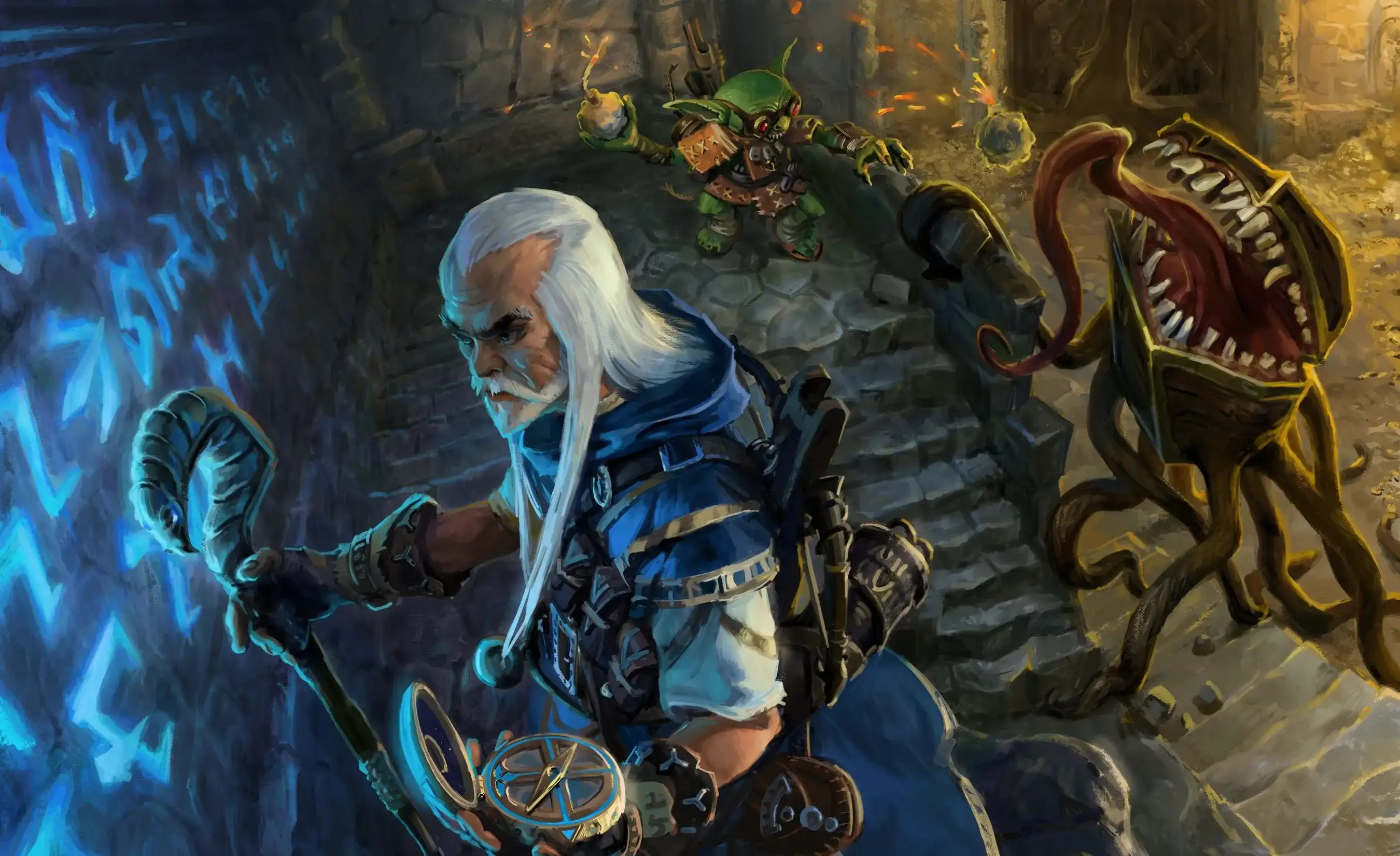
The eight classes of the first core book.
It improves the whole party's rolls with a single action, turn after turn. The class that makes everyone else better without stealing the show.
The best healing in the game, and a deity that sets limits in exchange. A three action heal spell picks the whole party up at once.
An order decides its style: animal companion, wild shape or command of the elements. Primal magic covers healing, damage and terrain control.
It starts expert in its weapon while the others are trained, a two point gap. The class that hits and crits more often than any other.
Hunting a prey lowers the multiple attack penalty and eases tracking. Three attacks in the same turn become genuinely playable.
An extra skill at nearly every level, and sneak attack whenever a foe is off guard. Out of combat it solves half the problems.
A familiar carries its spells, a patron supplies its magic and its obligations. Hexes are cast from a distance, which is wise given its hit points.
It prepares its spells each morning from a spellbook that grows with every adventure. The richest class in the game, and the most demanding to play.
The eight classes of the second core book.
It crafts a free batch of items every morning: bombs, elixirs, mutagens. It hands them round the party, which makes it a support class first.
Rage adds damage and hit points, but bars concentration actions. Simple to play and dangerous from level one.
Its reaction shields a nearby ally, which changes a fight completely. A cause replaces the old alignment and sets its conduct.
It rolls its d20 before acting and therefore knows whether the attack will land. The game's investigation class, as useful outside a fight as in one.
Stances change its unarmed strikes and its defence from turn to turn. It moves faster than anyone else, which matters a great deal.
Its divine magic is cast spontaneously, but a curse worsens with every use. The class that agrees to pay for one more spell.
A bloodline decides its magic: arcane, divine, primal or occult. It has more spontaneous slots than any other class.
It earns panache by taking risks, then spends it on a finisher. The class rewards showy play rather than calculation.
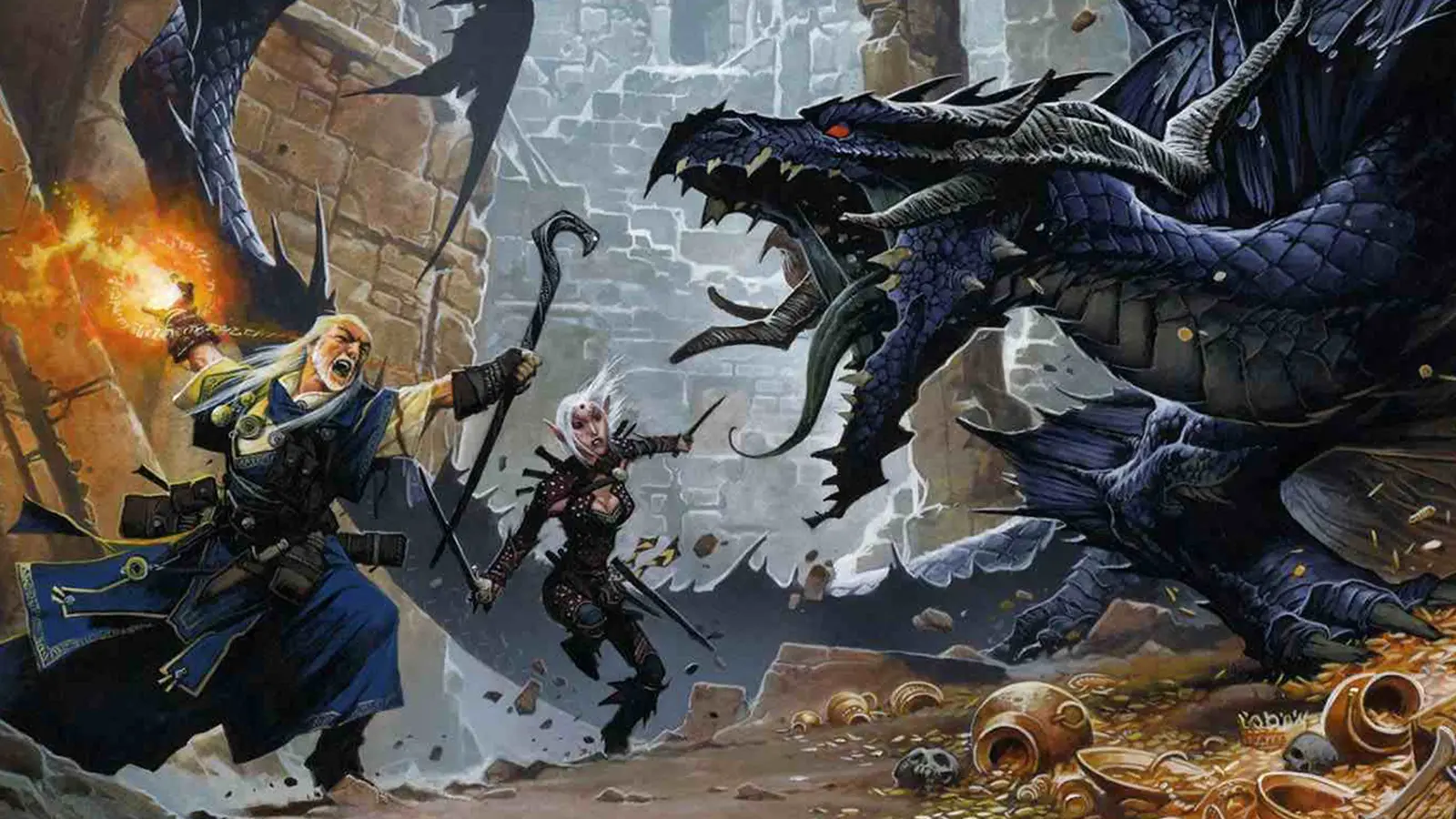
The other classes, published since.
The two core books hold sixteen classes, but Pathfinder keeps publishing more. The magus blends an attack and a spell into one motion, the summoner shares hit points with a bound creature, the thaumaturge exploits monster weaknesses, the psychic casts without components, the kineticist wields the elements without ever spending a spell slot.
Add the gunslinger and the inventor for tables that allow black powder and machines, then two more classes that arrived with War of Immortals. None of them is needed to begin: a whole campaign fits inside the first book, and the game master stays free to allow the others case by case.
Subclasses, chosen at level 1.
Almost every class asks for a defining choice at first level: a muse for the bard, a doctrine for the cleric, an order for the druid, a patron for the witch, a school of magic for the wizard, an instinct for the barbarian, a cause for the champion, a bloodline for the sorcerer, a mystery for the oracle.
That choice is never cosmetic: it grants spells, abilities and sometimes a constraint, like the oracle curse that worsens with every spell cast. The fighter is the exception and has no subclass, since all of its customisation runs through feats. Either way, two characters of the same class diverge from the very first session.
Class feats, the real customisation.
This is the big difference with other games of the same family. From first level for most classes, then at every even level, you pick a feat from your class list: a new attack, a stance, an extra spell, a manoeuvre. Almost nothing is automatic, you assemble your character level after level.
Alongside that, you gain an ancestry feat at odd levels, a skill feat at every even level and a general feat every four levels. That is a lot of choices, and it is deliberate: two level 10 fighters built separately almost never end up with the same options in hand.
Multiclassing, through archetypes.
Pathfinder does not mix levels from two classes. To reach into another class, you spend a class feat on the entry feat of a multiclass archetype, the wizard one for instance, then further feats to unlock its abilities. Your original class keeps progressing normally, and you lose neither hit points nor proficiencies.
Many tables add the free archetype optional rule, which grants an extra archetype feat at even levels without taking anything away. It is the cleanest way to play a fighter who casts a few spells or a cleric who can fight, without weakening anyone.
Choosing your class without regrets.
A clear image gives you ancestry, background and class in that order. The system is flexible enough to follow almost any idea.
Every class is fully readable online, feats included. Compare three before choosing, it only costs ten minutes.
Preparing spells every morning is a game within the game, and a real workload. Classes without magic play at the table's own pace.
Some classes have one action to repeat, others twelve possible combinations. Look at what you will do each turn, not at level 15.
With no healing, Pathfinder gets punishing by the third fight. A cleric, a druid, or at the very least potions, remain essential.
Archetypes let you add magic to a fighter or fighting to a wizard. Nothing is final, the first choice commits you less than it seems.
Playing your class online.
A Pathfinder class is a list of feats, spell slots, focus points and sometimes a curse that keeps climbing. On a paper sheet, half of those options end up forgotten at the bottom of the page.
Tomeus gathers the sheets, the dice, the scenery and the music in a single browser window. Every player keeps their feats in plain sight, the game master sees the whole table, and nobody installs anything.
Go further with Pathfinder.
How to Start Playing Pathfinder
Free rules, three actions per turn, ancestry, class and feats: the complete guide to start playing Pathfinder and run your first session in one evening.
The Basic Rules of Pathfinder
The d20 and the four degrees of success, the six ability scores, proficiency, the three actions, hit points and the dying condition: the rules of Pathfinder.
The Lore of Pathfinder
Golarion and the Inner Sea, the Age of Lost Omens, the ancestries, the gods and the great threats: the lore of Pathfinder explained, and how to use it at your table.
The Bestiary of Pathfinder
Reading a stat block, the creature types, what a monster level means, the experience budget of an encounter and the elite and weak adjustments.
Go further with tabletop RPGs.
How to Play a Tabletop RPG: the Beginner's Guide
How a session unfolds, what the game master does, dice, character sheets and how to play a tabletop RPG online. A complete guide for beginners.
How to Find Players for a Tabletop RPG
Game shops, clubs, conventions, Discord, online listings: where to find players for your tabletop RPG and how to write an ad people answer.
How to Prepare a Tabletop RPG Campaign
Setting, central stake, factions, NPCs and per-session prep: the method to build a tabletop RPG campaign without writing everything in advance.
How to Create a Tabletop RPG Character
Concept, class, ability scores, skills, backstory and bonds: the full method to create a tabletop RPG character who will carry a whole campaign.
Frequently asked questions.
How many classes are there in Pathfinder?
Sixteen across the two core books: bard, cleric, druid, fighter, ranger, rogue, witch and wizard in the first, alchemist, barbarian, champion, investigator, monk, oracle, sorcerer and swashbuckler in the second. About ten more have been published in supplements, and every rule remains readable online for free.
Which class should you pick as a beginner?
The fighter, the barbarian or the champion, because they carry no spell list: a few feats, three actions per turn, and all your attention free for the scene. The cleric suits anyone who wants to keep the group standing. The wizard, on the other hand, asks you to prepare spells every morning and read a dozen descriptions before the first session.
Can you multiclass in Pathfinder?
Yes, but not the way you would in Dungeons & Dragons. You never take levels in a second class: you spend a class feat to enter a multiclass archetype, then more feats to unlock its abilities. Your original class keeps progressing, and the free archetype optional rule makes the whole thing painless.