
The archetypes of Dune.
Dune has no classes. It has archetypes, roles in the service of a noble House: you play an heir, a Mentat, a Bene Gesserit, a swordmaster or the spy nobody is supposed to know about.
Here are the most common archetypes gathered in one place, what each brings to a group, how the character's past completes the picture, how you progress without levels, and which one to pick for a first character.
What an archetype actually decides.
An archetype locks almost nothing down. It sets a starting point for your five skills, points your first talents in a direction and gives you a precise place at court or in the field. The rest, your name, your past, your alliances and your secrets, is decided elsewhere and never depends on the template you picked.
In practice, the archetype answers a simple question: when the House has a problem, why do they call you? The Mentat calculates, the envoy negotiates, the swordmaster shields, the spy listens at doors. Two characters of the same archetype play very differently, because it is the drives and their statements that make the character.
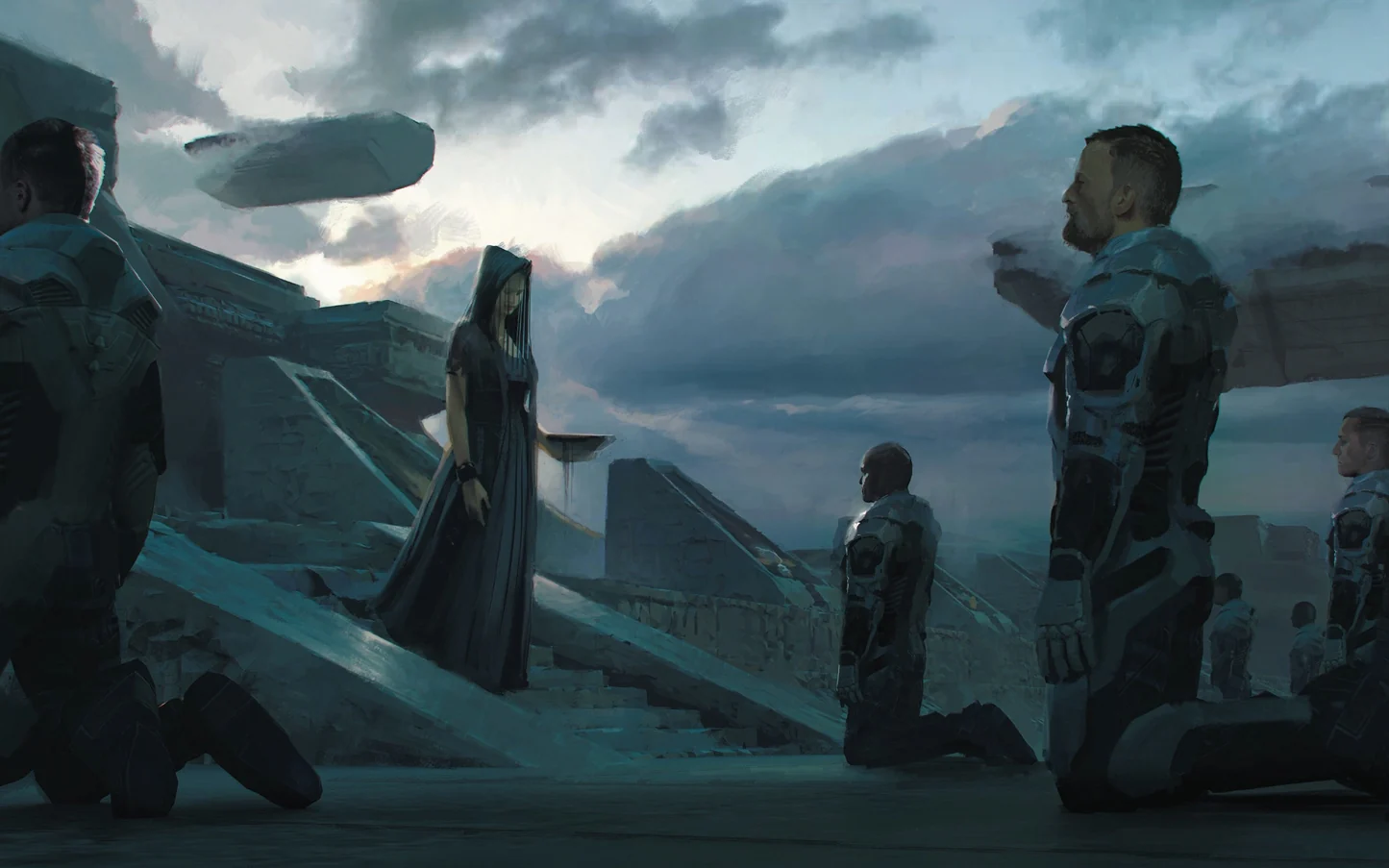
The archetypes of the court.
Heir, cousin, regent: they carry the House name and their word binds it. Authority opens doors and draws every knife in the room.
They run the odds, take lies apart and predict the other side's manoeuvres. The character with an answer for everything, rarely a comforting one.
Trained to read bodies and weigh every word, she serves the House and her order at once. A fascinating character, and never entirely loyal.
Diplomat, negotiator, spokesperson. They win by contract what others would go and take with weapons in hand.
They know everyone, place the right words at the right moment and track who owes what to whom. Formidable in a banquet hall.
Trained by a school that guarantees their loyalty, they treat the family and know its weaknesses. Nobody stands closer to the duke.
The archetypes of the field.
They drill the guard, shield the heirs and win the duels the House cannot afford to lose. Slow combat is their art.
Officer or veteran, they command people and hold a position. In a battle or on a raid, they are the reason everyone comes back.
They listen, follow, bribe and report. Their worth is measured in what the House learns before its rivals, never in a service record.
They move what must not appear in a ledger, and know the people who look away. Essential the moment a cargo matters.
They read a desert, a climate, a resource the way others read a map. On Arrakis that knowledge is worth an army.
Steward, factotum, right hand: they carry out decisions and absorb the surprises. The character who knows every file the House keeps.
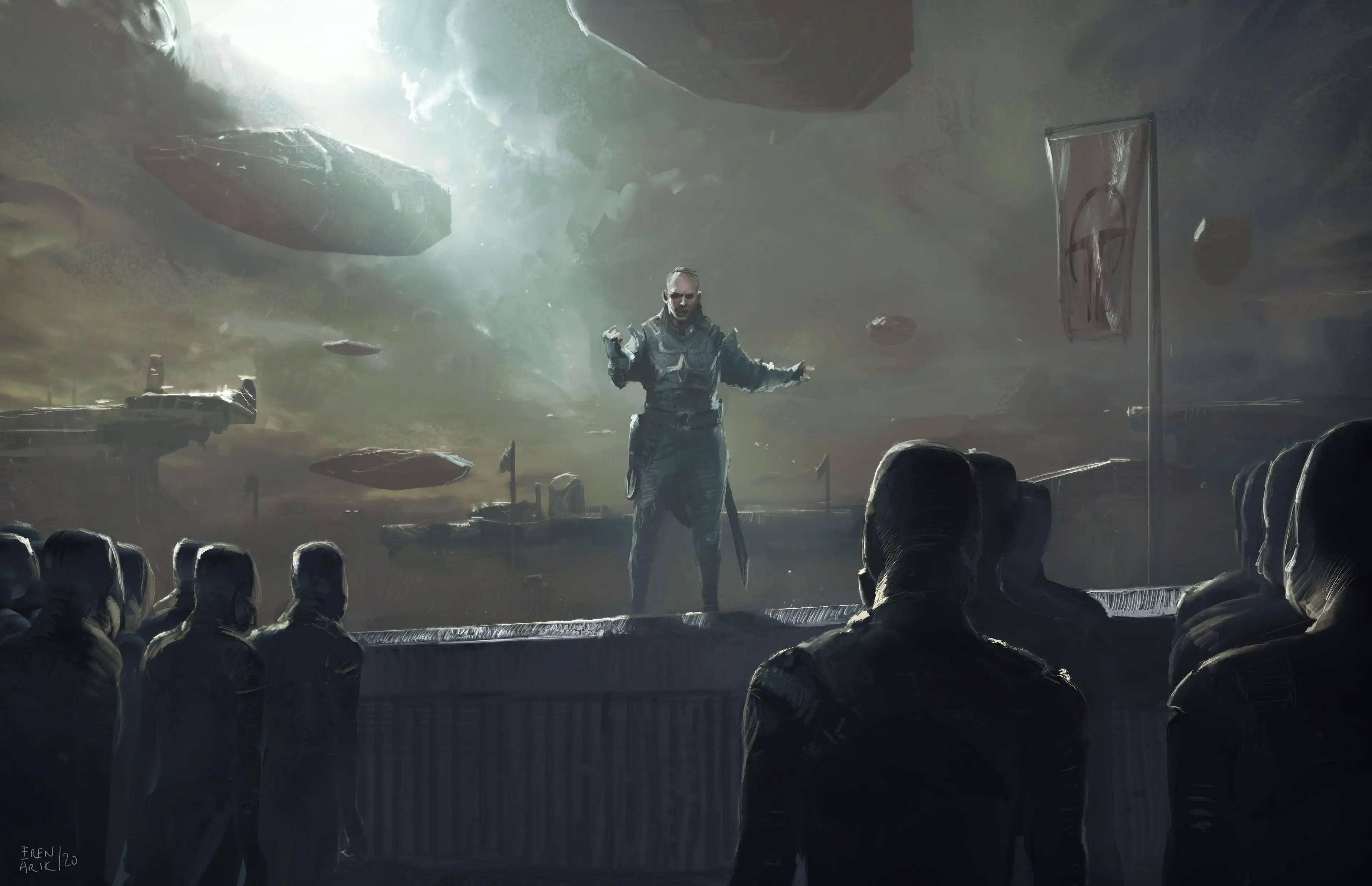
The path, what completes the archetype.
An archetype alone does not make a character. Creation then asks you to tell where you come from: your childhood, your training, and the event that settled who you became. Each step adds skills, talents and above all ties to the other characters around the table.
Last come the five drive statements, one per drive, written by the player. That is where the character takes shape: what they owe their House, what they believe in, what they refuse to let pass. A noble and a spy sharing the same Duty statement make a far better pair than two optimised sheets.
Progressing, without levels.
Dune has no levels and no experience classes. Between sessions a character gains a talent, sharpens a skill or forms a new relationship, based on what actually happened in play. Nobody advances faster than anyone else, and nobody becomes untouchable.
The real progression happens elsewhere. When a drive statement is tested and breaks, the player rewrites it: the character has changed their mind, or their side. A Dune campaign is measured in those rewritten statements far more than in the numbers on the sheet, and that is what gives the game its memory.
Choosing your archetype.
A function, a debt, a secret: the archetype comes after. You play a character better when you can introduce them in one sentence.
Both play with words and land in the middle of every scene. No extra rules to learn before you start.
You all serve the same banner. Ask what the House expects of you, and half the questions about drives answer themselves.
Two Mentats do less than a Mentat, a swordmaster and a spy. Cover the court, the field and the flow of information.
They are what sets off scenes and earns dice. One sharp sentence beats an extra point of skill every time.
An archetype you do not enjoy can be swapped, especially early on. Better to change at session two than to endure ten evenings.
Playing your archetype online.
Every archetype brings its own things to track: skills, talents, assets, relationships at court, and the drive statements that shift during a campaign. On a paper sheet, half of it is crossed out by the third session.
Tomeus brings the sheets, the dice roller, the backdrop and the music into one window. Everyone keeps their character up to date, the game master sees the whole table, and your players join from home with nothing to install.
Go further with Dune.
How to start playing Dune?
Free starter kit, dice, character and House creation: the guide to getting started with Dune: Adventures in the Imperium, around a table or online.
The basic rules of Dune
The two d20s and the target number, the five skills, the five drives, the pools and the three scales of conflict: the rules of Dune explained.
The lore of Dune
The Imperium and its powers, the Guild, the Bene Gesserit, the Mentats, Arrakis and its spice: the lore of Dune explained, and how to use it at your table.
The spice of Dune
Melange explained: its effects, longevity, prescience and dependency, who lives off it, harvesting against the worms, and how to make it drive a campaign.
Go further with tabletop RPGs.
How to Play a Tabletop RPG: the Beginner's Guide
How a session unfolds, what the game master does, dice, character sheets and how to play a tabletop RPG online. A complete guide for beginners.
How to Find Players for a Tabletop RPG
Game shops, clubs, conventions, Discord, online listings: where to find players for your tabletop RPG and how to write an ad people answer.
How to Prepare a Tabletop RPG Campaign
Setting, central stake, factions, NPCs and per-session prep: the method to build a tabletop RPG campaign without writing everything in advance.
How to Create a Tabletop RPG Character
Concept, class, ability scores, skills, backstory and bonds: the full method to create a tabletop RPG character who will carry a whole campaign.
Frequently asked questions.
How many archetypes does Dune offer?
The core book describes a dozen or so, from the noble to the smuggler by way of the Mentat, the Bene Gesserit, the swordmaster, the spy and the planetologist. Supplements add more, and nothing stops you building one to order: they are starting points, not closed boxes.
Which archetype should a first character take?
The noble to sit at the centre of decisions, the envoy for negotiation, the swordmaster to engage with conflict without going through politics. The Mentat and the Bene Gesserit are the richest, but they ask you to carry a character who always knows something the others do not.
Can two players take the same archetype?
Yes, and it works well in Dune because drives are what separate characters. Two nobles of the same House, one moved by Duty and the other by Power, generate whole scenes between them. Just avoid leaving an entire side of the campaign with nobody to cover it.