
How to prepare a tabletop RPG campaign?
A campaign is one story played across many sessions, with the same characters growing deeper month after month. It is the most rewarding format in tabletop role-playing, and the one that scares off the most game masters before the first session.
The good news: preparing a campaign takes far less writing than people assume. What you need is a handful of solid pieces and a great deal of empty space. Here is how to go about it.
Campaign or one-shot?
A one-shot runs in a single evening, ends that same night and needs nothing but a scenario. A campaign spans ten, twenty, sometimes fifty sessions, and rests on characters who evolve, factions who react and consequences that come back around.
If you are a new game master, start with two or three one-shots in the same setting. You will know your players, your pace and your rules before committing everyone to several months.
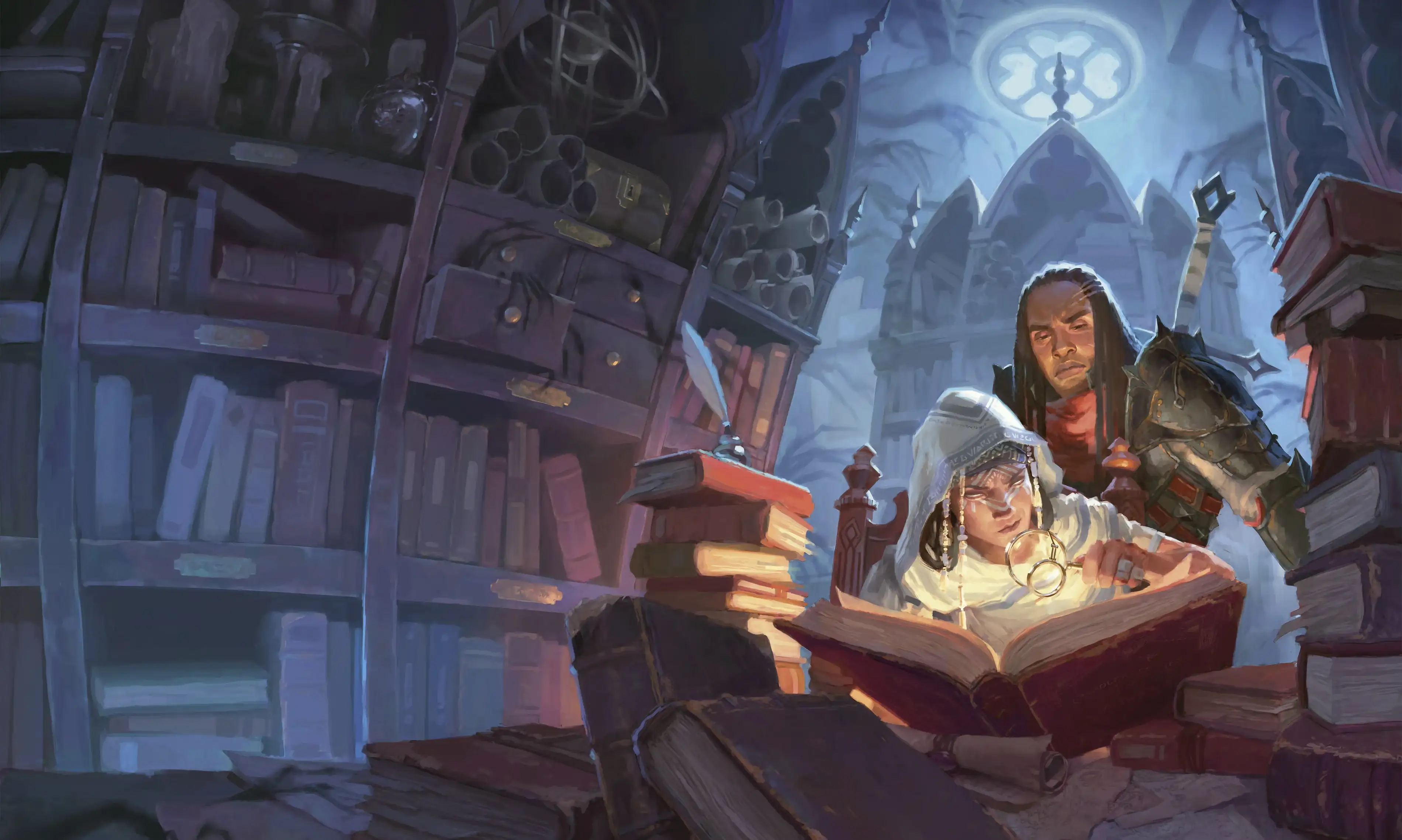
Preparing your campaign, step by step.
A setting the table already knows saves three hours of explaining. Tone matters as much as scenery: a grim investigation does not play like a heroic epic.
If you cannot sum up the campaign in one sentence, your players will not remember it. A cult wants to wake something under the city carries ten sessions.
Three groups, three conflicting goals. The characters simply position themselves between them and the plot moves without you pushing it.
Each character needs a personal reason to be there: a debt, a missing brother, an oath. Without that thread, a player stays a spectator.
It is the only scene worth writing in detail: the place, who is there, what happens if nobody moves. The rest improvises just fine.
A city with no map, an NPC with no name, an empty room: leave space for what your players invent. They will fill it better than you.
Preparing each session.
One page is enough. Note three likely scenes, a handful of NPC names, two or three complications to pull out if the pace drops, and what the factions are pursuing meanwhile. The rest is improvised from what your players actually do.
Never prepare the answers, only the situations. A game master who has written how the players will solve a puzzle spends the evening steering them back to that solution. Open each session with a three-sentence recap, asked of the players rather than recited to them.
Traps to avoid.
Forty pages written before the first session, thirty of which nobody will ever read. Prepare one session ahead, not a whole campaign.
A player is looking for their missing father while you push a war of succession. What the table cares about belongs in the plot.
An ending decided in advance turns players into extras. Set the stake and let the resolution be built at the table.
Three sessions of travel with no encounter and the campaign runs out of breath. Every scene should raise a question the table wants answered.
Twelve names in two sessions and nobody keeps up. Four NPCs the players recognise beat a crowd they forget.
Two minutes of recap at the start puts everyone back in the story. Without it, the table spends fifteen minutes remembering.
Running your campaign with Tomeus.
A campaign lives between sessions: backdrops come back, NPCs reappear, character sheets change. Finding all of it again at the right moment, session after session, is the real work of a game master.
Tomeus keeps your scenes, images, music and sheets in one place, ready to bring back in one click. You open the game, your players join through a link, and the campaign picks up where it stopped.
Go further with tabletop RPGs.
How to Play a Tabletop RPG: the Beginner's Guide
How a session unfolds, what the game master does, dice, character sheets and how to play a tabletop RPG online. A complete guide for beginners.
How to Find Players for a Tabletop RPG
Game shops, clubs, conventions, Discord, online listings: where to find players for your tabletop RPG and how to write an ad people answer.
The Best Tabletop RPGs for Beginners
Dungeons & Dragons, Call of Cthulhu, Alien, Monster of the Week: six easy tabletop RPGs for a first session, and how to pick the right one.
How to Create a Tabletop RPG Character
Concept, class, ability scores, skills, backstory and bonds: the full method to create a tabletop RPG character who will carry a whole campaign.
Discover Call of Cthulhu.
How to Start Playing Call of Cthulhu
Free quick-start rules, percentage skills, Sanity and a first investigation: the complete guide to start playing Call of Cthulhu in one evening.
The Basic Rules of Call of Cthulhu
The d100 and the three success thresholds, the eight characteristics, bonus dice, pushed rolls, combat and Sanity: the basic rules of Cthulhu explained.
The Lore of Call of Cthulhu
The Cthulhu Mythos, its places, its creatures, its Great Old Ones and its grimoires: the lore of Call of Cthulhu explained, and how to use it at your table.
Call of Cthulhu occupations
Call of Cthulhu has no classes but occupations: antiquarian, private investigator, journalist, doctor, their skills, skill points and Credit Rating explained.
Frequently asked questions.
How many sessions does a campaign last?
A short campaign fits in six to ten sessions, about six months at one evening every other week. That is the format to aim for on a first try: long enough for characters to grow, short enough to actually reach the end.
Can you run a campaign by improvising?
Largely yes, provided the foundations are in place: a central stake, factions with clear goals and NPCs who want something. Improvising is easy once you know what the world is doing while the players hesitate.
Do you need to write a full scenario?
No, and doing so works against you. A scenario written line by line breaks on the first unexpected decision. Prepare places, people and threats, not a chain of events your players are supposed to follow.