
Which tabletop RPGs are best for beginners?
The first game you put on the table often decides what comes next. Too heavy a system and the evening is spent reading rules. Too obscure a setting and nobody knows what to play.
Here are six games you can pick up in a single evening, what each one brings, and how to choose the one that fits your table.
What makes a good game to start with.
Twenty pages read in one evening, six hundred put you off before the first session. A short book also means fewer questions during play.
If making a character takes three hours, the first session is gone. Thirty minutes leaves time to actually play that evening.
A fantasy world or a 1920s investigation can be described in two sentences. An original setting takes an evening of explaining before you start.
Dice, a sheet, a pencil. Games that demand miniatures, boards and three rulebooks get expensive before you have even tried.
A starter set comes with a tested scenario, pregenerated characters and often the dice. It is the safest way to get a first session right.
Videos, free scenarios and players to ask when you are stuck. A game with no active community leaves a beginner alone with the rulebook.
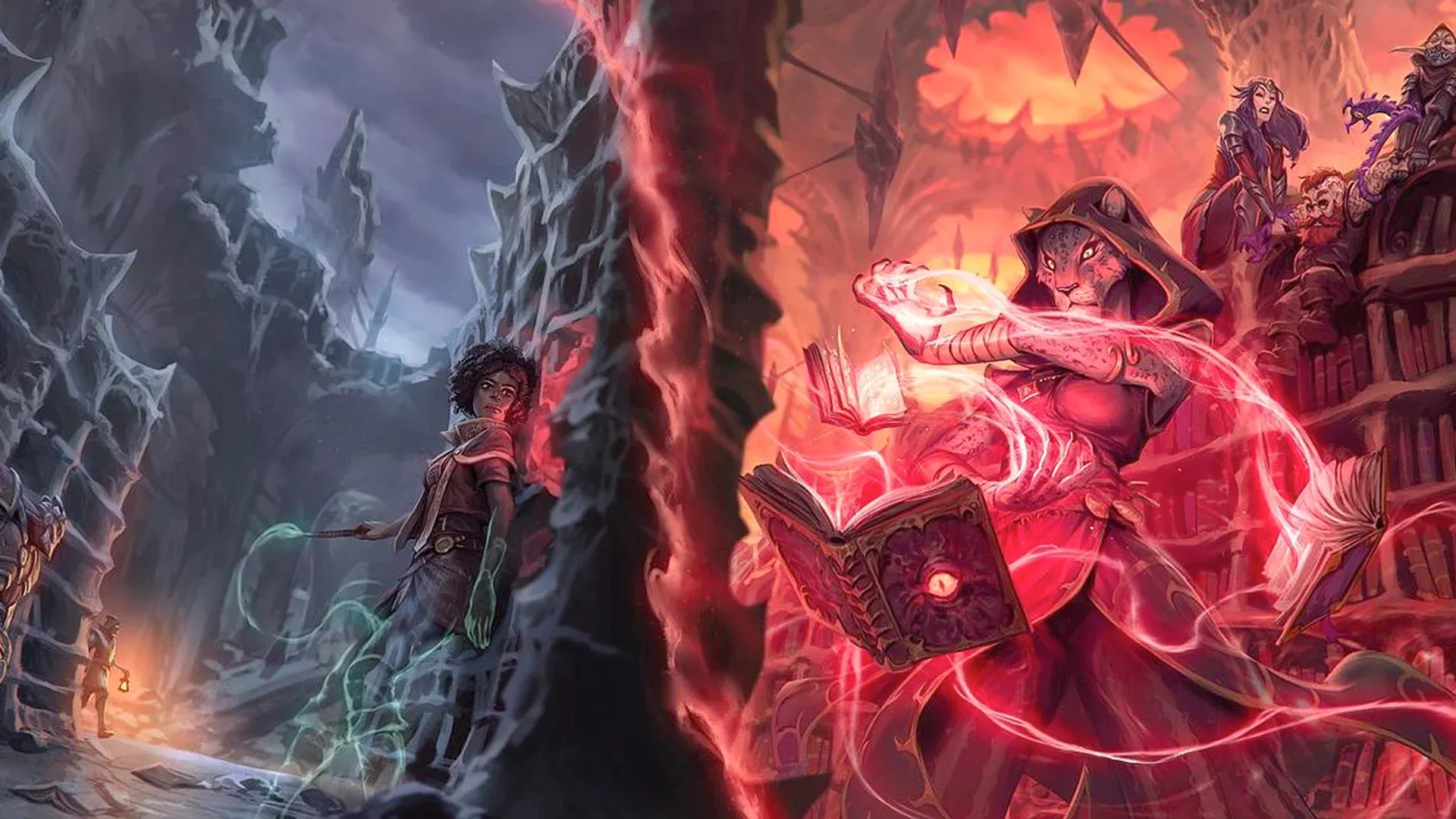
Six games for a first session.
The reference, and the busiest way in. The basic rules are free online, beginner scenarios are everywhere and any player you meet can explain an attack roll. Budget a good hour to build a character.
The French cousin of Dungeons & Dragons, stripped to the bone. A character takes fifteen minutes, the rules fit in a few pages and the starter box holds everything, dice included. The best pick if you want to play tonight.
Ordinary people investigate events far beyond them, in the 1920s. One hundred-sided die, percentage skills, and tension that works from the very first scene. Ideal for a one-night game.
Everyone already knows the setting, which saves an hour of explaining. Cinematic mode offers ready-to-play scenarios where every character chases a secret agenda. Brutally effective in one session.
One monster hunt per episode, in the spirit of a TV series. Characters are pre-written archetypes: pick a sheet and play. The system rewards description rather than arithmetic.
One page, one die, free. A crew explores space while its captain lies unconscious. Perfect to try tabletop role-playing in an hour, with nothing to buy and nothing to prepare.
How to pick yours?
Start from your players, not from the game. A table that loves crime shows, horror films or fantasy novels has already answered the question: take the game whose setting needs no explaining at all.
Then look at the time you have. For a single evening, take a short game with pre-made characters. For a longer story, a richer system like Dungeons & Dragons or Chroniques Oubliées will go the distance.
Traps of a first pick.
Six hundred pages bought, forty read, no session played. A big book looks good on the shelf and pushes the first session back six months.
Buying three games before finishing a single one is the most common reflex. Play the one you own before looking for the next.
A setting picked by you alone, and two players bored by the second session. Ask the table what they want to play.
Nobody knows all the rules, not even the authors. Read character creation and how actions resolve, the rest comes as you play.
A two year campaign announced upfront, and a group that scatters after three sessions. Start with a short scenario and see who stays.
Characters made separately have no reason to know each other. A shared creation session solves it in an hour.
Playing these games with Tomeus.
All of these games work as well remotely as around a table, as long as you can roll the dice, show a backdrop and keep the sheets within reach.
Tomeus gathers your scenes, images, music, chat and character sheets in a single window. You create the game, your players join through a link, and you play, whichever game you picked.
Go further with tabletop RPGs.
How to Play a Tabletop RPG: the Beginner's Guide
How a session unfolds, what the game master does, dice, character sheets and how to play a tabletop RPG online. A complete guide for beginners.
How to Find Players for a Tabletop RPG
Game shops, clubs, conventions, Discord, online listings: where to find players for your tabletop RPG and how to write an ad people answer.
How to Prepare a Tabletop RPG Campaign
Setting, central stake, factions, NPCs and per-session prep: the method to build a tabletop RPG campaign without writing everything in advance.
How to Create a Tabletop RPG Character
Concept, class, ability scores, skills, backstory and bonds: the full method to create a tabletop RPG character who will carry a whole campaign.
Discover Warhammer Fantasy Roleplay.
How to Start Playing Warhammer Fantasy Roleplay
The Old World, the d100, randomly rolled careers and lethal combat: the complete guide to start playing Warhammer Fantasy Roleplay and run a first session.
The Basic Rules of Warhammer Fantasy Roleplay
The d100 and difficulty, the ten characteristics, success levels, the combat round, wounds and fate points: the basic rules of WFRP explained simply.
The Lore of Warhammer Fantasy Roleplay
The Old World, the Empire and its provinces, the peoples, the four Chaos gods and the threats prowling around: WFRP lore explained, and how to use it at your table.
Warhammer Fantasy Roleplay Careers
The eight career classes, the four tiers, social status, the random roll and changing careers: how WFRP careers work and how to pick your first one.
Frequently asked questions.
Which tabletop RPG should I pick for a very first session?
Chroniques Oubliées Fantasy or Lasers & Feelings if you want to play tonight, Dungeons & Dragons 5e if your group means to settle in for the long run. Either way, hand out pre-made characters for the first session.
Do you need to buy a book to start?
No. The basic rules of Dungeons & Dragons are available for free, Chroniques Oubliées offers a free booklet and several games fit on a single page. Buying makes sense once your table has found the game it likes.
How many players for a first session?
Three players and a game master is the most comfortable format. Everyone gets time to play, scenes stay readable, and you only have three sheets to track while you learn the system.