The bestiary of Dungeons & Dragons.
The bestiary is the part of the game that describes what the characters run into: a goblin waiting behind a rock, a wolf pack, something undead at the bottom of a crypt, a dragon asleep on its hoard. Every creature fits into a half-page stat block, ready to use in play.
Here is how that bestiary works: reading a stat block, the main creature types, the monsters the game is known for, challenge rating, building an encounter, and the habits that make a monster memorable at the table.
Reading a stat block.
A stat block holds everything you need to run the creature: armour class, hit points, speed, the six ability scores, any resistances, senses, languages, challenge rating, then its special traits and its actions. Nothing else is required, not even a miniature.
Monsters have no class and no level: they are built straight from the numbers that make them interesting to fight. The game master reads that block like a simplified character sheet, and in practice keeps only four lines in mind during combat, armour class, hit points, attack bonus and damage.
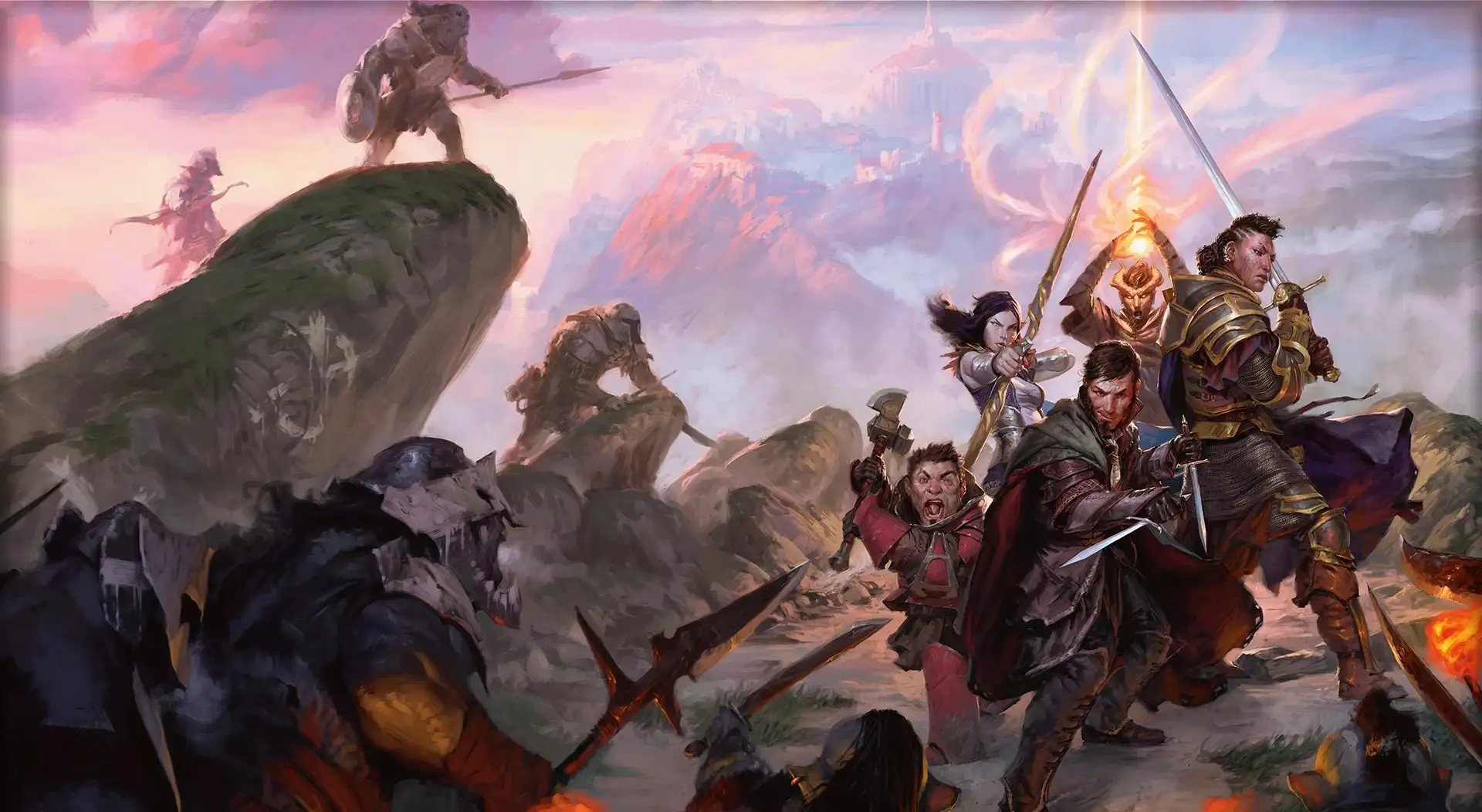
The main creature types.
This is what characters face most often at low levels. They negotiate, flee and betray, which opens up more than a fight.
Animals, with no magic and no elaborate tactics, but dangerous in numbers. They also serve as templates for the druid's wild shape.
Immune to poison and fear, they never negotiate and never run. Some drain hit points, which leaves a lasting mark on a table.
Devils that strike bargains, demons that destroy for no reason. They resist ordinary weapons, which finally makes magic weapons matter.
A devastating breath, resistance to magic and real intelligence. An adult dragon is a campaign event, not a corridor encounter.
Creatures from elsewhere, with nothing human about their logic. They attack the mind rather than the body, which changes a fight completely.
Six monsters the game is known for.
Seven hit points, a weak attack, but it moves and hides in the same turn. Six goblins will trouble a level 1 party.
It attacks with advantage as soon as another wolf is next to the target, and knocks it prone. The pack does the work, not the individual.
A single creature, two attacks a turn and nothing going on upstairs. Perfect for a first genuinely dangerous encounter.
Its central eye shuts down magic in a cone, its ten rays fire at random. Play it paranoid, in ambush, never in the open.
It has prepared the ground for centuries and its phylactery brings it back if you forget about it. An opponent with a plan, servants and plenty of time.
A breath that catches the whole party, legendary actions between turns and a trapped lair. It talks, bargains and remembers who hurt it.
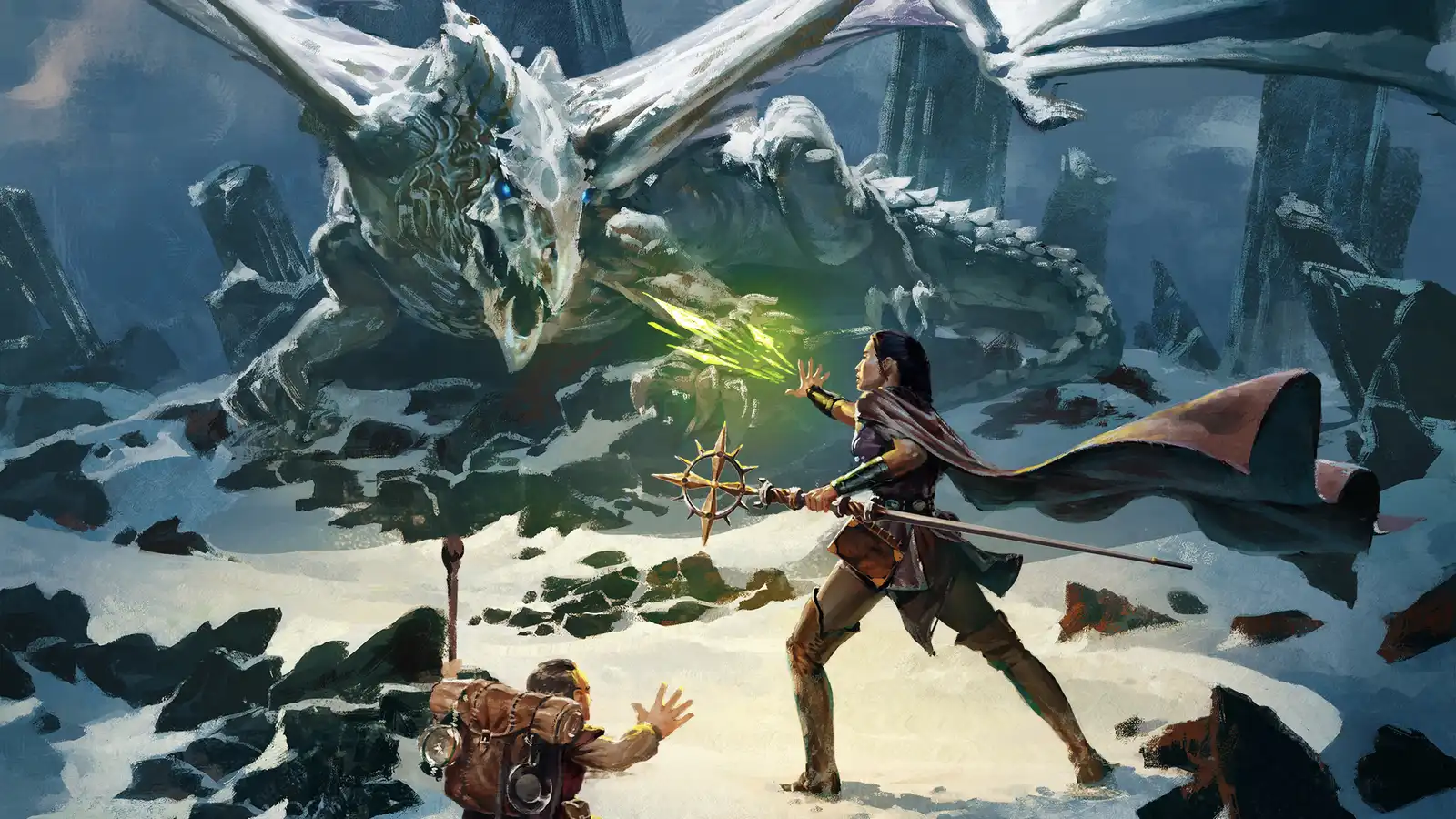
Challenge rating, and what it misses.
Every creature carries a challenge rating, from 0 for a rat to 30 for the most powerful entities. The idea is simple: a creature rated at the party's level is a serious but winnable fight for four characters. It is a starting point, not a promise.
The rating ignores plenty of things: terrain, surprise, how many monsters there are, the state of the party after three fights without a rest, and who is sitting at the table. Two ogres against four third-level characters go fine in the open and turn lethal in a corridor. Experienced game masters use the rating to sort their options, then adjust while playing.
Building an encounter.
A good encounter is picked first for what it says about the world. Goblins raiding a convoy, a ghoul drawn to a neglected graveyard, a young dragon taxing a village: the monster follows from the place and the situation, and the challenge rating only checks afterwards that the fight stays playable.
Mixing roles works better than stacking copies: one solid opponent, two or three weaker creatures around it, sometimes a spellcaster hanging back. Not every encounter has to end in combat either. A monster that bargains, flees or simply watches often makes a better session than a tenth identical fight.
Bringing a monster to life at the table.
A stat block sometimes hides three features that change the whole fight. Discovering them mid session costs ten minutes and a lot of tension.
The wolf's profile works fine as a war dog, a hyena or a creature from your nightmares. Change the description, keep the numbers.
A troll in a swamp, goblins on walkways, a lich in its crypt. Terrain provides half the difficulty of an encounter.
Goes for the weakest, runs at half hit points: one sentence is enough to make a monster memorable. Without it, everything attacks whoever is closest.
A band of robbers surrendering makes a better scene than a fight to the last. Few creatures actually fight to the death.
When the outcome is no longer in doubt, describe the ending instead of playing three more rounds. Nobody remembers a goblin's last hit point.
Running your monsters online.
A game master chasing stat blocks slows the whole table down: the book open in one hand, hit points scribbled in a corner, the initiative order lost by the third round.
Tomeus gathers the sheets, the dice roller, the backdrop and the music in a single window. Players see the scene, the game master keeps their notes on their own side, and nobody installs anything.
Go further with Dungeons & Dragons.
How to Start Playing Dungeons & Dragons
Free basic rules, dice, character creation and a first session: the complete guide to start playing Dungeons & Dragons, around a table or online.
The Basic Rules of Dungeons & Dragons
The d20 and the difficulty class, the six ability scores, the rolls, the combat turn, hit points and resting: the basic rules of D&D explained simply.
The Lore of Dungeons & Dragons
The multiverse and its planes, the great worlds, the peoples, the pantheons and the dragons: D&D lore explained, and how to use it at your table.
The Classes of Dungeons & Dragons
The twelve D&D classes explained: barbarian, fighter, rogue, cleric, wizard and the rest, their subclasses, and how to pick yours as a beginner.
Go further with tabletop RPGs.
How to Play a Tabletop RPG: the Beginner's Guide
How a session unfolds, what the game master does, dice, character sheets and how to play a tabletop RPG online. A complete guide for beginners.
How to Find Players for a Tabletop RPG
Game shops, clubs, conventions, Discord, online listings: where to find players for your tabletop RPG and how to write an ad people answer.
How to Prepare a Tabletop RPG Campaign
Setting, central stake, factions, NPCs and per-session prep: the method to build a tabletop RPG campaign without writing everything in advance.
The Best Tabletop RPGs for Beginners
Dungeons & Dragons, Call of Cthulhu, Alien, Monster of the Week: six easy tabletop RPGs for a first session, and how to pick the right one.
Frequently asked questions.
Where do you find the D&D bestiary?
The Monster Manual gathers the creatures of the game, and the Dungeon Master's Guide explains how to use them. The free basic rules, published online by the publisher, already include several dozen monsters, enough to run a full campaign from level one to level five without buying anything.
How many monsters are there in D&D?
Several hundred in the Monster Manual alone, and thousands once you count forty years of supplements. Nobody knows them all, and there is no need to: a whole campaign runs happily on thirty or so well-chosen creatures, brought back and varied from session to session.
Can you make your own monsters?
Yes, and the easiest route is to start from an existing block: keep the numbers, change the name, the appearance and one ability. The Dungeon Master's Guide also provides tables to build a creature from scratch around a challenge rating, but adapting a published monster covers most needs.