
How to create a tabletop RPG character?
Creating a character is the first thing a player does, often before knowing the rules. It is also the step that decides your next ten sessions: a character you recognise yourself in, or simply enjoy playing, carries a whole campaign, while a neatly optimised pile of numbers runs out of steam in three evenings.
The good news is that the method stays the same whatever the game. A concept, an archetype, ability scores, a short past and ties to the rest of the table. Here is how to go about it, in order.
What sits on a character sheet.
A sheet holds three families of information. Identity first: name, looks, origin, job or class. Numbers next: abilities such as strength or intelligence, skills, hit points, gear. Intentions last: what your character wants, what they fear, who they care about.
The first two families are dictated by the rules, the third almost never is, and yet it is the one that brings the character to life at the table. Fill the required boxes quickly, then spend five minutes on the three sentences printed nowhere on the sheet.
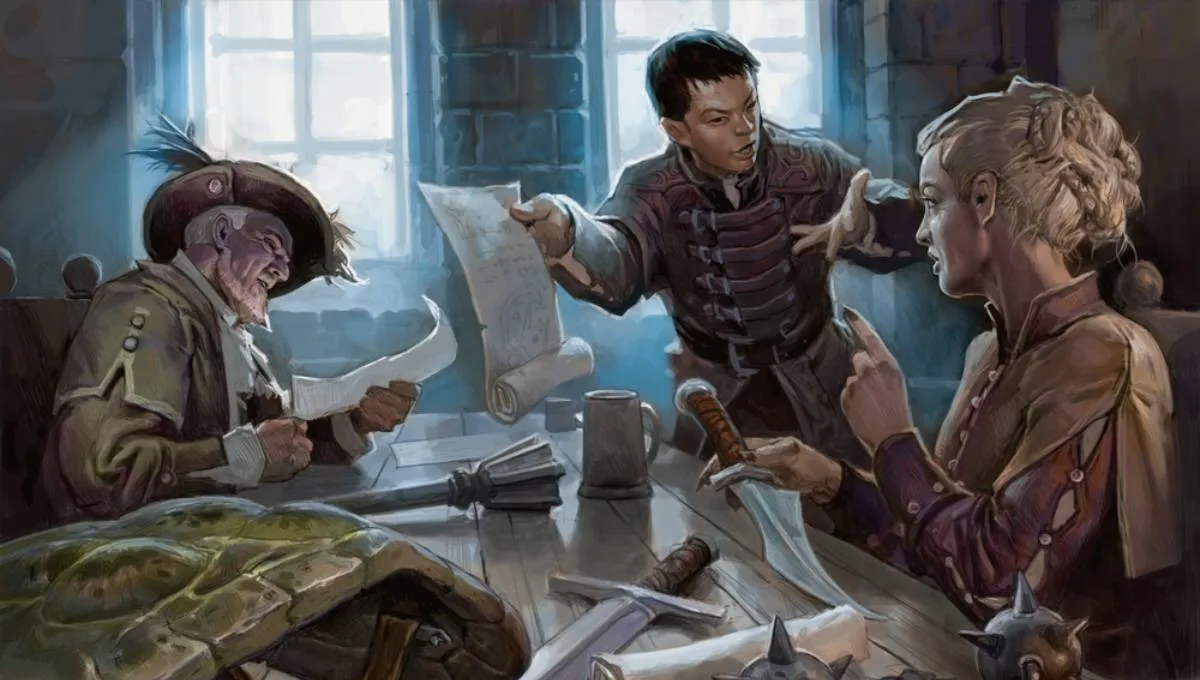
Creating your character, step by step.
One sentence is enough: a thief paying off her father's debt, a priest who doubts. Everything else on the sheet follows from it.
Fighter, wizard, investigator: the archetype says what you do when a scene gets tense. Pick the one the group is missing rather than the strongest.
Two strong scores, one accepted weakness. A character good at everything never truly shines, and never needs the others.
Look at what the others took before choosing. A table where nobody can pick a lock finds out at the first locked door.
Three lines the game master can actually use: a place, a person, a debt. Ten pages end up in a drawer.
A bond with every other character, however small. It heads off the awkward first session question: what brought us together?
A concept that fits in one sentence.
“A noble thief paying off her father's debts”, “a priest who lost his faith but not his powers”, “a mechanic terrified of open space”. A good concept sentence carries a role, a tension and a reason to act. It is your compass every time you wonder what your character would do.
Try that sentence on your game master before touching any numbers. If they can immediately draw a scene, an NPC or a complication out of it, your character is ready to step into the story. If not, add what is missing: an unsolved problem, a debt, a promise.
Traps to avoid.
A mysterious character who refuses to follow the party forces the others to argue in every scene. Nobody has fun, least of all the loner.
A perfectly calculated sheet with no personality plays like a spreadsheet. Concept first, numbers second.
Ten pages of backstory, of which the game master will use two lines. Keep the rest and let the campaign write what comes next.
A rich, settled and satisfied character has no reason to leave. They need a debt, a threat or a curiosity.
Playing a film character note for note is funny for ten minutes. Keep the inspiration, change the name and one motivation.
A secret nobody will ever uncover does not exist in play. Give the game master a way to bring it to the surface.
Your character sheets on Tomeus.
A sheet lives and changes: hit points go up and down, gear piles up, bonds shift session after session. On paper all of it ends up crossed out, or left at home on game night.
Tomeus keeps your characters online, with their portrait, their scores and their story, reachable from any game. You update them during the session, your players find them on the next click, and the table moves on without hunting for the right sheet.
Go further with tabletop RPGs.
How to Play a Tabletop RPG: the Beginner's Guide
How a session unfolds, what the game master does, dice, character sheets and how to play a tabletop RPG online. A complete guide for beginners.
How to Find Players for a Tabletop RPG
Game shops, clubs, conventions, Discord, online listings: where to find players for your tabletop RPG and how to write an ad people answer.
How to Prepare a Tabletop RPG Campaign
Setting, central stake, factions, NPCs and per-session prep: the method to build a tabletop RPG campaign without writing everything in advance.
The Best Tabletop RPGs for Beginners
Dungeons & Dragons, Call of Cthulhu, Alien, Monster of the Week: six easy tabletop RPGs for a first session, and how to pick the right one.
Discover Vampire: The Masquerade.
How to Start Playing Vampire: The Masquerade
Clans, disciplines, Hunger and Humanity: the complete guide to start playing Vampire The Masquerade, build a first character and run your first night.
The Basic Rules of Vampire: The Masquerade
The dice pool and successes, the nine attributes, criticals, Hunger dice, damage and Humanity: the basic rules of Vampire The Masquerade explained.
The Lore of Vampire: The Masquerade
The World of Darkness, the thirteen clans, the Camarilla and the Anarchs, the Traditions, Gehenna and the Jyhad: the lore of Vampire The Masquerade explained, and how to use it at your table.
The Clans of Vampire: The Masquerade
The thirteen clans of Vampire The Masquerade explained: their three disciplines, their bane, their compulsion, the Caitiff and the thin-bloods, and how to pick yours.
Frequently asked questions.
How long does it take to create a character?
About fifteen minutes in a light game, a good hour in Dungeons & Dragons when it is your first time. For a first session many tables hand out pre-made characters: you play straight away and build your own for session two, once you finally know the rules.
Do you need a long backstory?
No. Three elements are enough: where your character comes from, what they want now, and one person who matters to them. A short past leaves room for what happens at the table, and that is where your character's story really gets written.
Which character should you pick for a first session?
One close to you, simple to play and clearly useful to the group: a fighter, a scout, an investigator. Avoid classes with twenty spells and concepts resting on a secret or a betrayal. There will be plenty of time to get complicated once the rules have sunk in.