
How to start playing Dune?
Dune: Adventures in the Imperium puts the players in the service of a noble House, inside a feudal empire where the spice of Arrakis is worth more than any fleet. You scheme at least as much as you fight, and a well placed sentence often does more damage than a blade.
Getting started with Dune asks far less than the scale of the novel suggests. Here is what the game actually does, what you need to gather, how to build a first character and their House, and how to run your first session, around a table or online.
What is Dune?
Dune: Adventures in the Imperium is a tabletop role-playing game published by Modiphius in 2021, set in Frank Herbert's universe. One player takes the game master seat: they describe the courts, play the rival Houses and arbitrate the rules. The others each play an agent serving the same noble House, from the heir to the master assassin.
The loop has three beats. The game master sets a situation, the players say what their characters do, then two twenty-sided dice settle the actions whose outcome is uncertain. What sets the game apart lies elsewhere: your House is a character in its own right, with holdings, allies and enemies, and the campaign tells the story of its rise as much as yours.
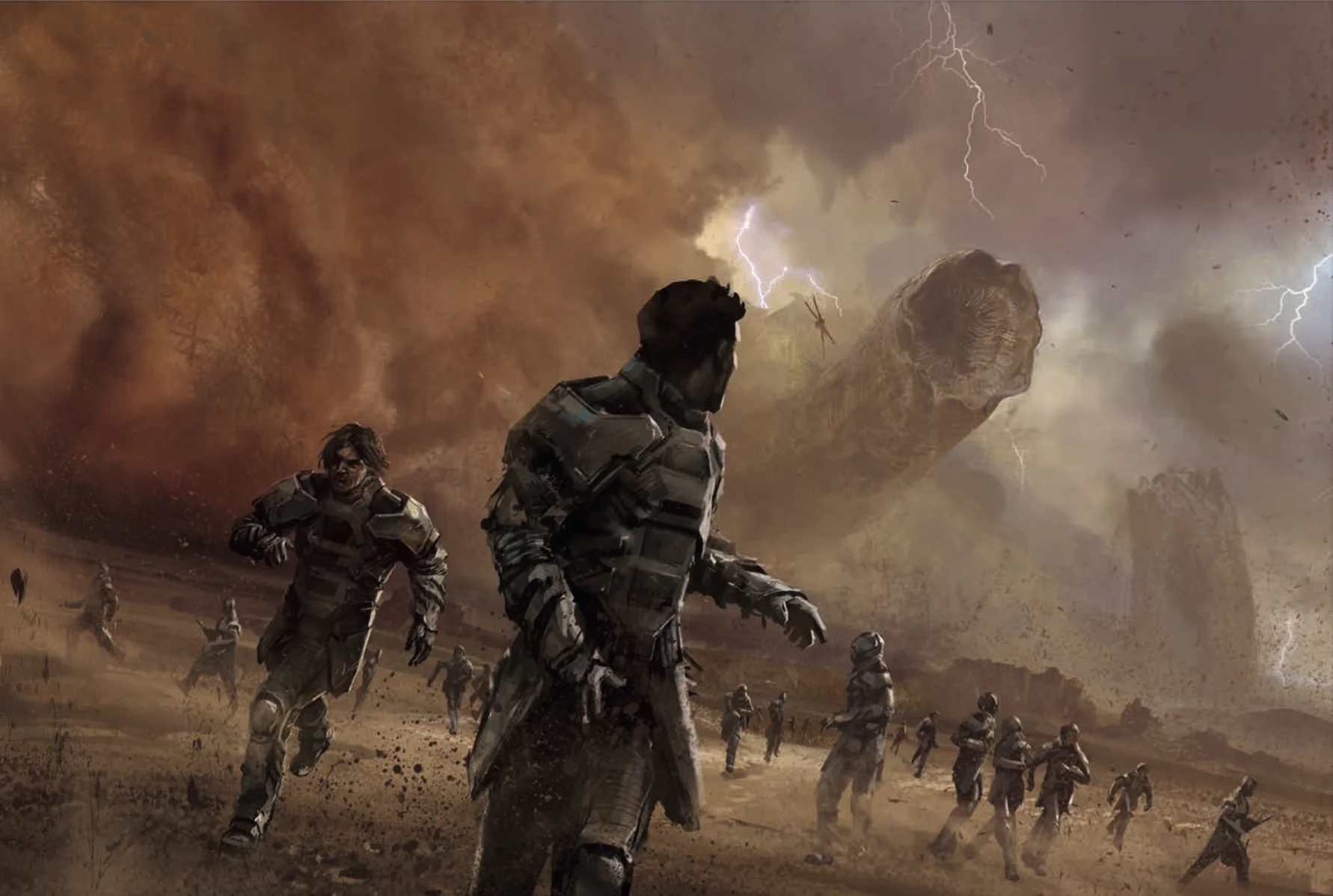
Starting Dune, step by step.
Modiphius publishes a quickstart booklet with the core rules, ready-made characters and an adventure. Enough for a full evening without buying anything.
Four players and a game master is the balance most adventures are written for. Everyone serves the same House, which keeps the group from pulling in six directions.
This is the person who describes the Imperium, plays the rival Houses and rules on the rules. An hour of prep per session is plenty at the start.
Before the characters, the group builds its minor House: its holdings, its reputation, its enemies. An hour between five people, and the campaign is already running.
Five skills, five drives and one written statement for each of them. Allow an hour the first time, as a group and out loud.
An audience, a rival, a secret to protect: starter adventures hand you all of it. Improvising comes easier once you have played.
What you need to get started.
The official booklet covers tests, conflict and the essentials of the setting. Nobody needs the core book for the first session.
The whole system rests on them, plus a few six-sided dice for damage. One set each saves passing them around all evening.
Print the official sheet and keep a separate page for the House. It is the document the table will reach for most often.
Two pools move constantly, the group's and the game master's. Tokens in the middle of the table keep both visible to everyone.
Under three hours the intrigue barely stands up. Plan a break in the middle, attention drops after two hours.
Noble names, favours owed and promises made vanish between sessions. One player taking notes does the whole table a favour.
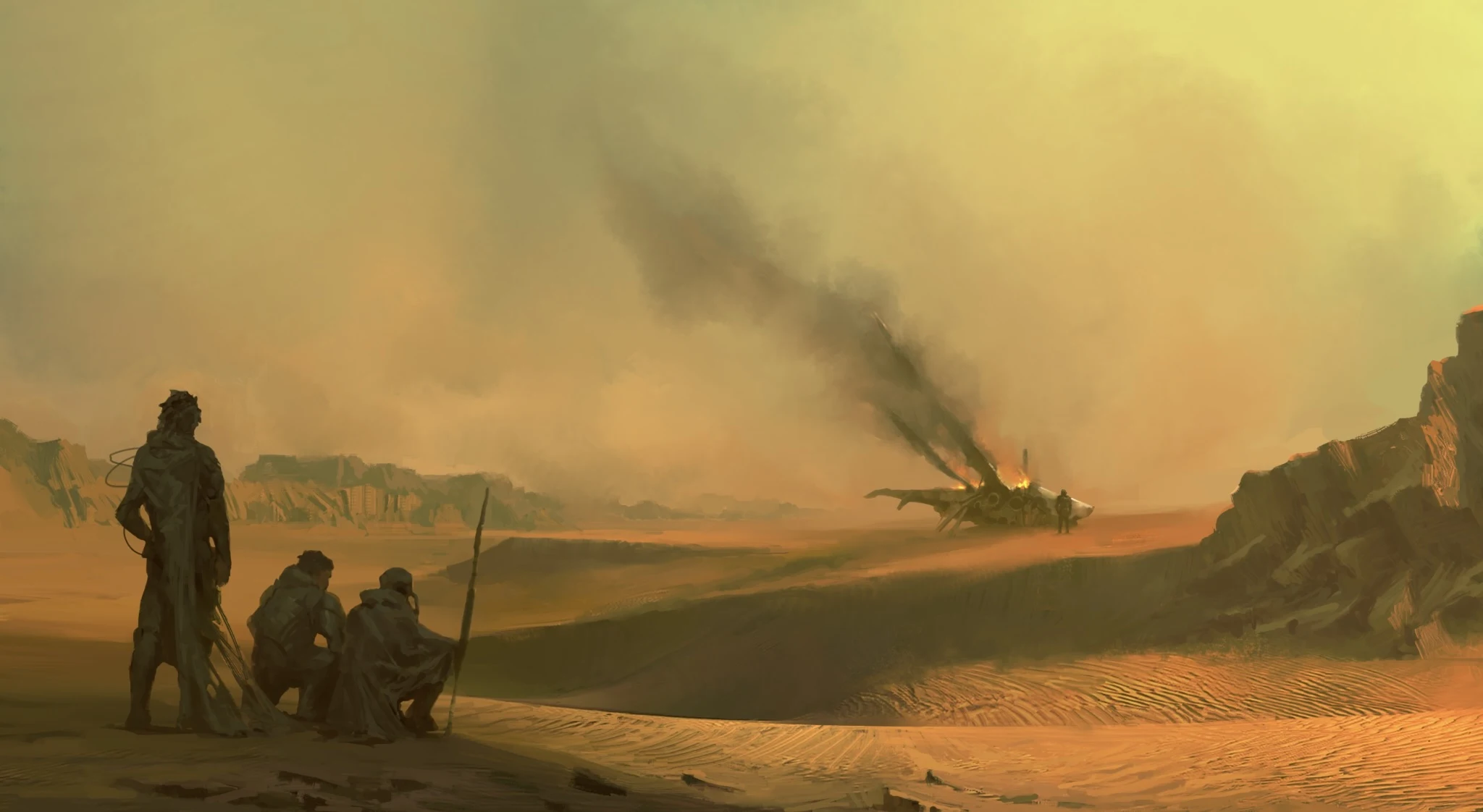
Building your first character.
A Dune character fits into two columns. Five skills, from Battle to Understand, describe what you can do. Five drives, from Duty to Truth, describe what pushes you forward, and each comes with a statement written by the player: what you believe, and how far you would go to defend it.
Then come talents, assets and a concept, from noble to Mentat by way of swordmaster or Bene Gesserit. Count an hour for a first character, less if you start from a pregenerated one. Do not chase the optimal sheet: your drives will make the best scenes, especially where they contradict each other.
Your first session.
Plan a full evening and a short intrigue written for beginners. The adventures bundled with the starter kit exist for that: they hand you a court, a rival and a secret, without asking the game master to reread six novels.
Open on a simple scene, an audience, a banquet, a message that should never have arrived, and let the players ask questions. The game master does not need to know every rule: when in doubt, call it quickly, note the question and check after the session.
The mistakes beginners make.
Six books and millennia of history do not fit in one head. The Emperor, the spice and the great Houses are enough for a first session.
In the Imperium, a drawn blade often means you have already lost. Intrigue, rumour and favour settle far more than weapons do.
Here everyone serves the same House. Shared creation gives ties, internal rivalries and a reason to act together from the first scene.
A cautious sentence triggers nothing. Write down what your character would sacrifice, that is where the best scenes come from.
Announcing two years of play before knowing whether the group holds together is the surest way to give up halfway. Three sessions is test enough.
Looking up the exact rule for ten minutes breaks the pace better than any rival. Make a call on the spot, check between sessions.
Playing Dune online.
Your players rarely all live in the same city, and free evenings seldom line up. Online, everyone joins from home, with voice, video, dice and a shared space that stands in for the table.
Tomeus is a virtual tabletop built to be quick: you create a game, import a backdrop image, pick a track and send the link. Your players join in one click, with their sheets and the dice roller in front of them, and nothing to install.
Go further with Dune.
The basic rules of Dune
The two d20s and the target number, the five skills, the five drives, the pools and the three scales of conflict: the rules of Dune explained.
The lore of Dune
The Imperium and its powers, the Guild, the Bene Gesserit, the Mentats, Arrakis and its spice: the lore of Dune explained, and how to use it at your table.
The archetypes of Dune
The archetypes of Dune explained: noble, Mentat, Bene Gesserit, swordmaster, spy and the rest, their place at court, and how to choose yours.
The spice of Dune
Melange explained: its effects, longevity, prescience and dependency, who lives off it, harvesting against the worms, and how to make it drive a campaign.
Go further with tabletop RPGs.
How to Find Players for a Tabletop RPG
Game shops, clubs, conventions, Discord, online listings: where to find players for your tabletop RPG and how to write an ad people answer.
How to Prepare a Tabletop RPG Campaign
Setting, central stake, factions, NPCs and per-session prep: the method to build a tabletop RPG campaign without writing everything in advance.
The Best Tabletop RPGs for Beginners
Dungeons & Dragons, Call of Cthulhu, Alien, Monster of the Week: six easy tabletop RPGs for a first session, and how to pick the right one.
How to Create a Tabletop RPG Character
Concept, class, ability scores, skills, backstory and bonds: the full method to create a tabletop RPG character who will carry a whole campaign.
Frequently asked questions.
Do you need to buy the book to start playing Dune?
No. Modiphius offers a starter kit online for free: it holds the core rules, ready-made characters and a complete adventure. Enough to run a session or two before buying anything. The core book becomes useful after that, to freely build a House and characters.
Do you need to have read Dune to play?
No, a ten minute summary carries you: a feudal empire, a desert planet producing the spice, noble Houses fighting each other without ever declaring open war. Reading the novel or watching the films helps you picture it, but the game supplies what you need, and plenty of tables play in eras other than Paul Atreides'.
Is the game built around combat?
No, and that is what sets it apart. The system handles intrigue, duels and warfare with the same rules, which puts a conversation at court on the level of a battle. A whole campaign can run on manoeuvring, alliances and betrayals, without a single blade leaving its sheath.