
The bestiary of Pathfinder.
The bestiary is the part of the game describing what the characters run into along the way: a goblin band lurking in the ruins near Otari, a drake guarding a mountain pass, an undead stirring under a chapel, a demon loose from the Worldwound. Every creature fits in one ready to play stat block.
Here is how that bestiary works: reading a stat block, the main creature types, the monsters that define Golarion, what a creature level tells you, the experience budget that builds an encounter, the elite and weak adjustments, and the habits that make a creature memorable at the table.
Reading a stat block.
A Pathfinder stat block reads in order: level and traits at the top, then Perception and senses, languages, skills, ability modifiers, armour class and the three saving throws, hit points, immunities, resistances and weaknesses, speed, strikes and finally special abilities.
Two details change everything compared with neighbouring games. Creatures carry no ability scores, only modifiers, and every strike and every ability resolves through the four degrees of success. A monster has no class and no feats to track: the block holds exactly what the game master needs, nothing more.
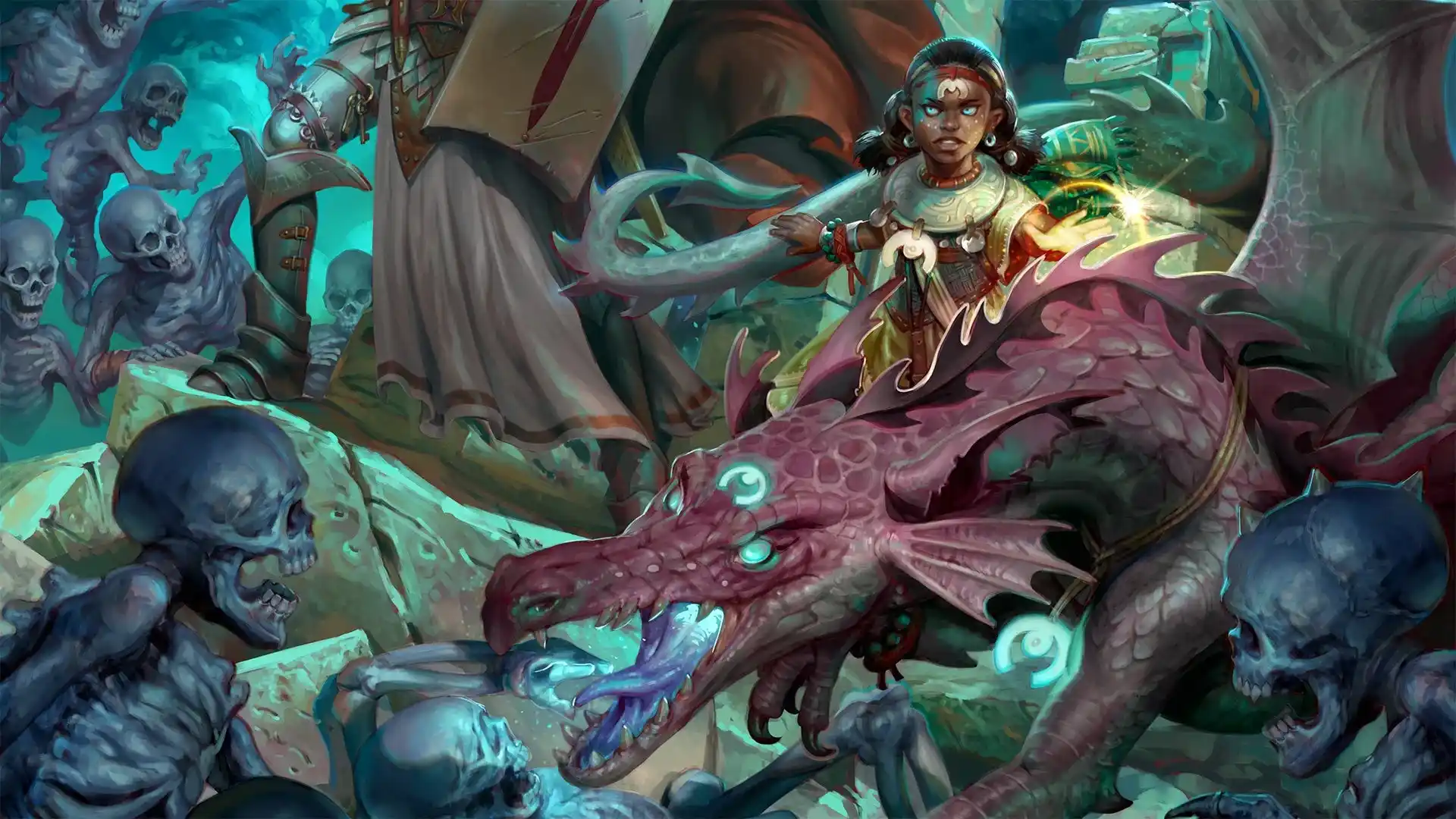
The main types of creatures.
These are the low level opponents, able to talk and to run. A well played band of goblins is more memorable than a lone monster.
No magic and no elaborate tactics, but formidable senses and reflexes. They remind you a journey is never a simple transition.
Immune to fear and poison, they are often vulnerable to holy damage. A weakness well used turns a losing fight into a win.
Demons of the Abyss and devils of Hell do not chase the same goals. The first destroy, the second get you to sign.
Since the remaster they are sorted by magical essence rather than by colour. Each holds a territory, a hoard and a conversation to be had.
They bargain, take offence and keep their word to the letter, never in spirit. The best opponents for a scene with no fighting.
Six defining creatures.
Promoted from vermin to playable ancestry, songs included. It sums up the tone of the game: dangerous, but rarely serious.
Small enough to beat early, dragon enough to leave a mark. It flies, it breathes, and it leaves when things turn against it.
It regenerates every turn until someone brings fire or acid. Without that weakness, the fight simply never ends.
It attacks with no plan, resists a great deal and never surrenders. Its weakness to holy damage is the key to most fights.
It prepares, it plans and it returns as long as its phylactery exists. Tar-Baphon is the official example, on a continental scale.
It talks before it fights, and sometimes the fight never happens. Breath, spells and multiple actions make it the most complete opponent in the game.
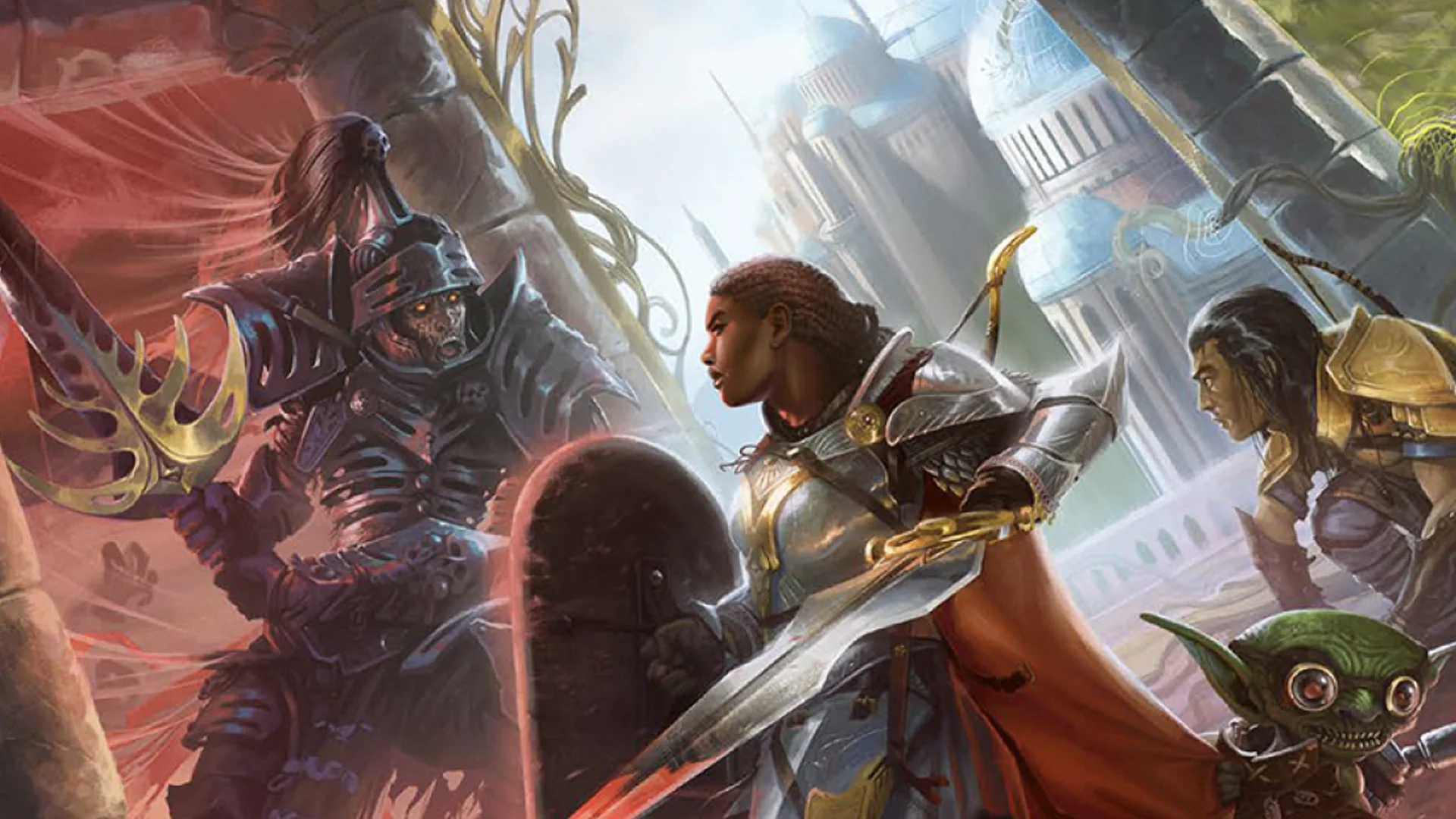
A creature level, and what it tells you.
In Pathfinder every creature carries a level, from minus one for a rat to twenty-five and beyond for near divine entities. That level compares directly with the characters' own, which makes it far easier to read than a separate rating: a creature at the party level is a serious opponent, a creature two levels above is a genuine boss.
The scale is also steeper than in neighbouring games. Two levels of difference noticeably change the odds of hitting and being hit, four levels make the fight nearly impossible in either direction. That is deliberate: the system assumes the game master picks levels precisely, and it rewards groups who go around a creature that is too strong instead of charging it.
Building an encounter on an experience budget.
Pathfinder gives you a simple formula. For four characters you have eighty experience points for a moderate encounter, one hundred and twenty for a severe one and one hundred and sixty for an extreme one. Each creature costs according to its level gap with the party: forty points at party level, sixty one level above, twenty two levels below.
The budget is yours to spend: a single opponent two levels above, four creatures two levels below, or a leader surrounded by minions. Each player more or less adjusts the budget accordingly, and the most memorable encounters remain those mixing roles rather than stacking copies of the same monster.
Elite and weak, adjusting in a minute.
Two official adjustments let you recycle any creature. The elite adjustment adds a level: plus two to armour class, strikes, difficulty classes and saving throws, along with extra hit points depending on its level. The weak adjustment does exactly the opposite and takes a level away.
It is the most useful tool in the bestiary. It lets you bring back a creature the players know well while making it threatening again, scale a published encounter to a group of three or six, or turn a plain guard into a captain without rewriting anything.
Bringing a creature to life at the table.
A creature block holds reactions and abilities that change the whole fight. Discovering them mid session costs ten minutes and a lot of tension.
Calling out a critical success or a critical failure makes every roll readable. Players then understand why hitting a weakened enemy is worth more.
Weaknesses and resistances reward anyone who observes before striking. A player who finds the right answer should feel it at once.
Three actions a turn make scenery decisive: height, cover, distance. An empty room turns any monster into a bag of hit points.
An intelligent creature bargains, flees or calls for help when it is losing. It is also what makes it memorable and lets it come back.
When the outcome is settled, describe the ending instead of playing three more rounds. A Pathfinder fight already lasts long enough.
Running your monsters online.
A Pathfinder game master juggles hit points, conditions, the multiple attack penalty and the initiative order. With the book open in one hand and notes on a scrap of paper, everything slows down by the third creature.
Tomeus gathers the sheets, the dice roller, the backdrop and the music in a single browser window. The players see the scene, the game master keeps notes on their own side, and nobody installs anything.
Go further with Pathfinder.
How to Start Playing Pathfinder
Free rules, three actions per turn, ancestry, class and feats: the complete guide to start playing Pathfinder and run your first session in one evening.
The Basic Rules of Pathfinder
The d20 and the four degrees of success, the six ability scores, proficiency, the three actions, hit points and the dying condition: the rules of Pathfinder.
The Lore of Pathfinder
Golarion and the Inner Sea, the Age of Lost Omens, the ancestries, the gods and the great threats: the lore of Pathfinder explained, and how to use it at your table.
The Classes of Pathfinder
The sixteen classes of the two core books, the subclasses, the class feats and multiclassing through archetypes: the classes of Pathfinder explained.
Go further with tabletop RPGs.
How to Play a Tabletop RPG: the Beginner's Guide
How a session unfolds, what the game master does, dice, character sheets and how to play a tabletop RPG online. A complete guide for beginners.
How to Find Players for a Tabletop RPG
Game shops, clubs, conventions, Discord, online listings: where to find players for your tabletop RPG and how to write an ad people answer.
How to Prepare a Tabletop RPG Campaign
Setting, central stake, factions, NPCs and per-session prep: the method to build a tabletop RPG campaign without writing everything in advance.
The Best Tabletop RPGs for Beginners
Dungeons & Dragons, Call of Cthulhu, Alien, Monster of the Week: six easy tabletop RPGs for a first session, and how to pick the right one.
Frequently asked questions.
Where can you find the Pathfinder bestiary?
Monster Core gathers around four hundred creatures and has replaced the first Bestiary since the remaster, with the later volumes filling out the collection. More importantly, the publisher releases its rules under an open licence: every monster remains readable online for free, on Archives of Nethys in particular.
How many monsters are there in Pathfinder?
Several thousand if you count every book published since the game came out. Nobody knows them all, and nobody needs to: a whole campaign runs on thirty well chosen creatures, turned elite or weak as the levels climb.
Can you build your own monsters?
Yes, in three ways. The quickest is to reuse an existing block and change its name and appearance. The second applies the elite or weak adjustment. The third follows the building tables in the GM guide, which give the armour class, hit points, attack and damage values to aim for at each level.